


Energy Density
Learn what Energy Density means in EV batteries, how it affects range, battery weight, battery aging, and used EV resale value.
Energy Density
Energy density describes how much energy a battery cell or pack can store per unit of weight. In EV battery design, it is primarily a technical parameter used by OEMs, battery design teams, and manufacturing teams when selecting suitable cells for the vehicle’s energy and power requirements.
For used-EV buyers, energy density is indirectly relevant. Buyers usually do not see individual battery weight or detailed cell-level specifications in public information. What they can understand is whether the original pack design supports practical range, efficient packaging, and stable vehicle performance.
A higher-energy-density battery can help an OEM deliver more range without adding unnecessary pack weight. Yet it does not prove that a used EV still has healthy capacity today. Battery ageing, heat exposure, charging behaviour, and current SoH decide how the vehicle performs during resale.
Most modern EVs use lithium-ion batteries because they offer high energy per unit mass and volume compared with other storage systems. The Alternative Fuels Data Centre notes that lithium-ion batteries also offer a strong power-to-weight ratio, efficiency, and low self-discharge.
TL;DR
|
What does energy density mean in an EV battery?
Energy density is how much energy a battery stores relative to its weight. It is usually measured as watt-hours per kilogram. Volumetric density is a separate concept, which describes how much energy fits within a given physical volume.
This distinction matters because energy density and volumetric density should not be used interchangeably. Energy density helps explain the original battery design, but it is not a figure most EV buyers can directly verify from public vehicle information.
For buyers, the practical value lies in understanding what energy density can and cannot explain. It can explain why OEMs choose certain battery cells, but it cannot confirm the current health, range, or resale value of a used EV.
- Weight impact: Energy density, measured by weight, indicates how much energy is stored in each kilogram of battery. A higher number can help reduce pack weight, although safety systems and cooling hardware still affect final vehicle weight.
- Space impact: Volumetric energy density shows how much energy fits inside a fixed battery volume. This matters because EV makers need battery packs that fit safely under the floor without reducing cabin practicality.
- Range impact: Higher energy density can support better range from a similarly sized battery pack. Buyers should still check the current State of Health, as ageing can reduce usable capacity over years of ownership.
- Resale impact: Energy density helps explain why some newer EVs feel more efficient than older models. During resale, the current battery report matters more than the original battery specification.
How is energy density different from battery capacity?
Energy density and battery capacity are related, but they do not mean the same thing. Capacity shows how much total energy the pack stores. Energy density shows how efficiently energy is packed per unit weight or volume.
Difference | Energy Density | Battery Capacity |
Meaning | Energy stored against battery weight or volume. | Total energy stored in the battery pack. |
Common unit | Wh/kg or Wh/L for battery comparison. | kWh for total pack storage capacity. |
Buyer question | How efficient is the battery design? | How much energy can this EV store? |
Used EV risk | Original density does not show ageing. | Current usable capacity may reduce over time. |
Resale value role | Helps compare battery technology generations. | Helps estimate range and replacement exposure. |
Why should used EV buyers understand energy density?
Used EV buyers should understand energy density as a battery design term, not as a direct buying metric. It helps explain how the original battery pack was built and why some EV platforms deliver better range from a lighter or smaller pack.
However, buyers cannot usually verify energy density across used EV listings. Sellers rarely share cell weight, pack design, or detailed battery specifications. That is why energy density should guide understanding, while current battery health should guide the purchase decision.
- Higher Energy Density can improve range potential when battery design, vehicle weight, and software efficiency work together.
- Battery chemistry changes practical outcomes because LFP and NMC packs behave differently across cost, safety, and density.
- Used EV value depends on present health because ageing can reduce capacity despite strong original battery design.
- Buyers should compare range evidence with SoH, warranty status, service history, and charging behaviour before payment.
- TruEV Score™ helps add context by reading the used EV condition beyond brochures and seller claims.
How does energy density affect EV range and battery weight?
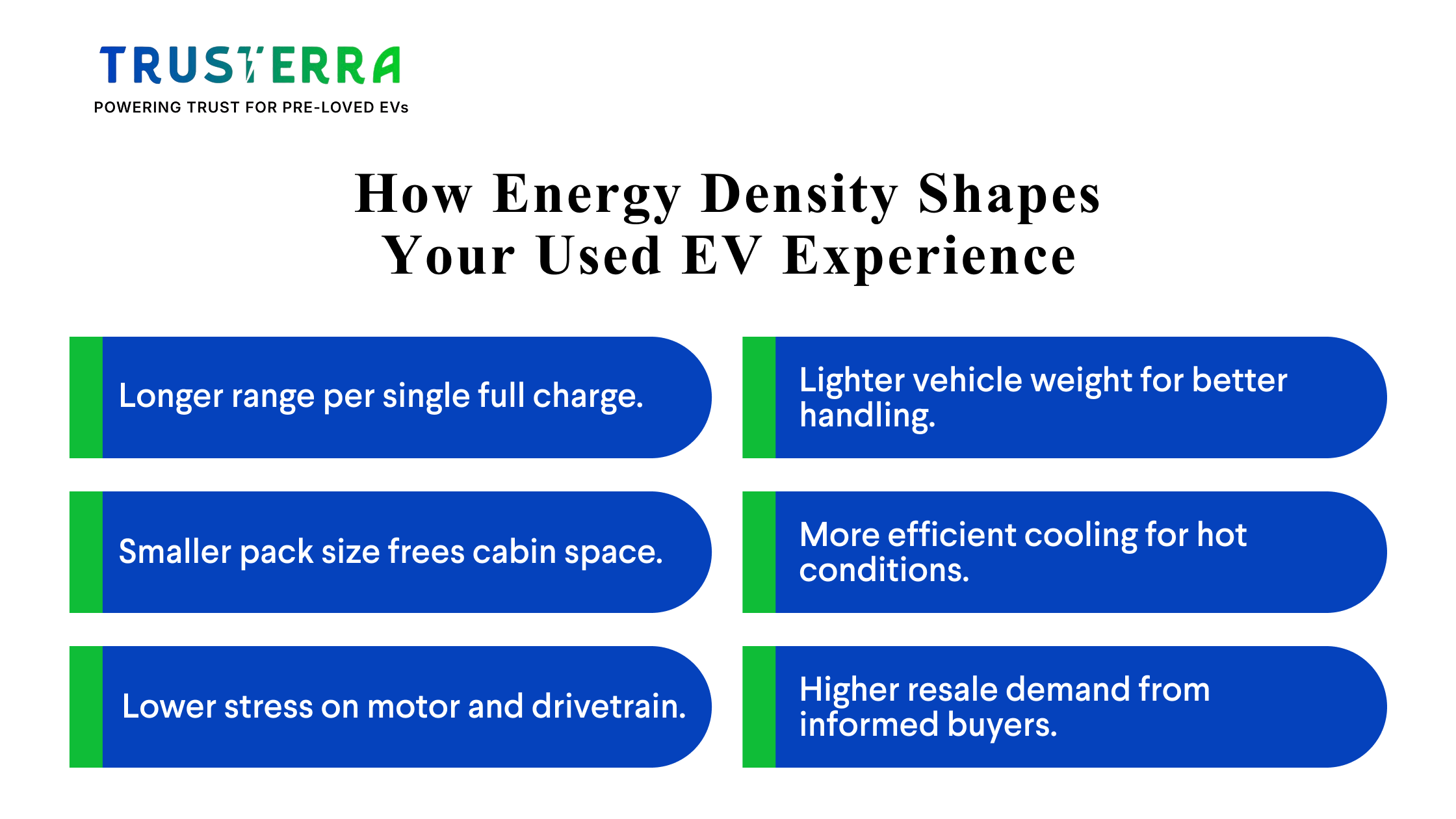
Energy density affects range because a battery can store more energy without adding the same weight or size. This can help EV makers design lighter packs with useful driving distance. The buyer still needs a current SoH because used batteries lose usable capacity with age.
A higher-density pack can also improve packaging inside the vehicle. More energy can fit under the floor, leaving more room for passengers and storage. This design benefit matters most when comparing older EV platforms with newer battery architectures.
The resale question is different from the design question. A used EV with modest original density and strong health may serve a buyer better than a high-density EV with weak SoH. Current battery behaviour should lead to the final decision.
How does energy density differ across battery chemistries?
Energy density varies because each battery chemistry balances range, safety, cost, and durability differently. NMC usually supports higher energy density, while LFP offers stronger thermal stability and cycle life. Newer chemistries such as sodium-ion and solid-state are important, but their used EV impact remains limited today.
- NMC batteries: NMC batteries offer high energy density, which makes them common in long-range and premium EVs. Their thermal stability needs robust battery management, so charging history, heat exposure, and fast-charging patterns matter during used EV valuation.
- LFP batteries: LFP batteries usually have lower energy density than NMC batteries. They are valued for thermal stability and longer cycle life, making them suitable for urban commuters and commercial fleets where frequent charging is common.
- Sodium-ion batteries: Emerging for budget-conscious, entry-level, and short-range mobility use cases. They trade higher energy density for lower raw material costs, greater supply chain independence, and potential affordability benefits in future EV segments.
- Solid-state batteries: Solid-state batteries promise higher energy density and improved safety by replacing liquid electrolytes with solid materials. They remain in pilot and future development stages, so they do not yet influence India’s mainstream pre-owned EV market.
What should buyers check beyond energy density?
Energy density helps explain battery design, but it does not confirm the quality of used EVs. Buyers should check current health, range behaviour, charging history, and warranty status before making payment. A verified report is more useful than a brochure number.
- State of Health: SoH shows how much usable capacity remains in the battery today. It gives buyers a clearer resale signal than original pack design because it reflects current battery ageing.
- Real-world range: Practical range shows whether the EV fits daily travel needs. Buyers should compare displayed range with expected usage, city traffic, climate, and charger access.
- Charging history: Charging behaviour can explain battery stress over time. Frequent fast charging in hot conditions may affect long-term battery comfort more than occasional public charging.
- Warranty status: Battery warranty can reduce future cost exposure for a used EV buyer. Always check transfer rules, remaining months, kilometre limits, and claim conditions before purchase.
- Inspection report: A verified inspection report turns battery condition into usable evidence. It helps buyers compare listings and helps sellers defend pricing with fewer disputes.
How does energy density influence used EV resale value?
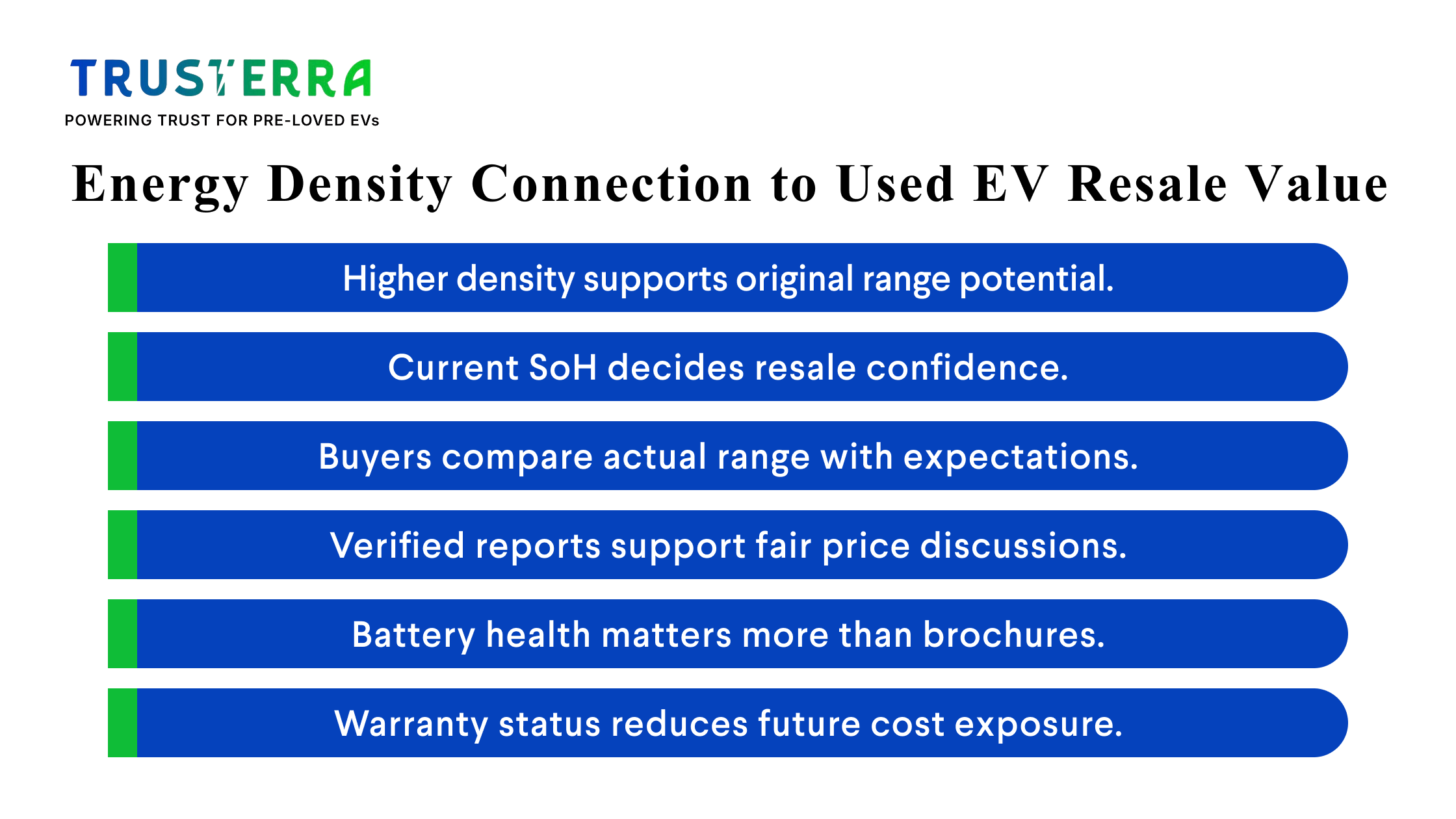
Energy density can influence resale value when it supports strong range and better battery packaging. Yet resale buyers pay for current usability, not theoretical performance. A high-density EV with weak battery health may sell for less than a simpler EV with strong battery evidence.
- Original battery design explains range potential but does not prove the EV still performs well today.
- Current SoH drives price confidence because buyers care about usable range and future replacement exposure.
- Higher range models may retain demand when battery reports and service records support the asking price.
- Replacement exposure can reduce value if pack costs account for a large share of the vehicle's price.
- Verified health data reduces negotiation friction because buyers can see evidence behind the seller’s price.
How does Trusterra help buyers assess energy density and battery health?
TrusTerra helps buyers avoid treating energy density as a direct inspection metric. Energy density is a design-related parameter, so it is not directly read during a used EV inspection. Instead, TrusTerra focuses on current battery evidence that affects actual resale value.
During inspection, regular battery parameters such as SoH, usable capacity, range behaviour, charging history, thermal exposure, and warranty status matter more. These indicators show how the battery performs today, while energy density only explains the original design intent.
The TruEV Score™ helps translate pack health, range confidence, and remaining useful life into a clearer assessment. TerraScan supports diagnostic checks where vehicle access permits. Together, these tools help buyers understand the battery they will actually use, not only the battery design described in brochures.
Ready to understand your used EV's true energy potential? Get your TruEV Score™ from TrusTerra and buy with confidence.