


What is Cell Balancing?
Learn what cell balancing means in EV batteries, how it affects range, charging behaviour, battery health, and used EV value.
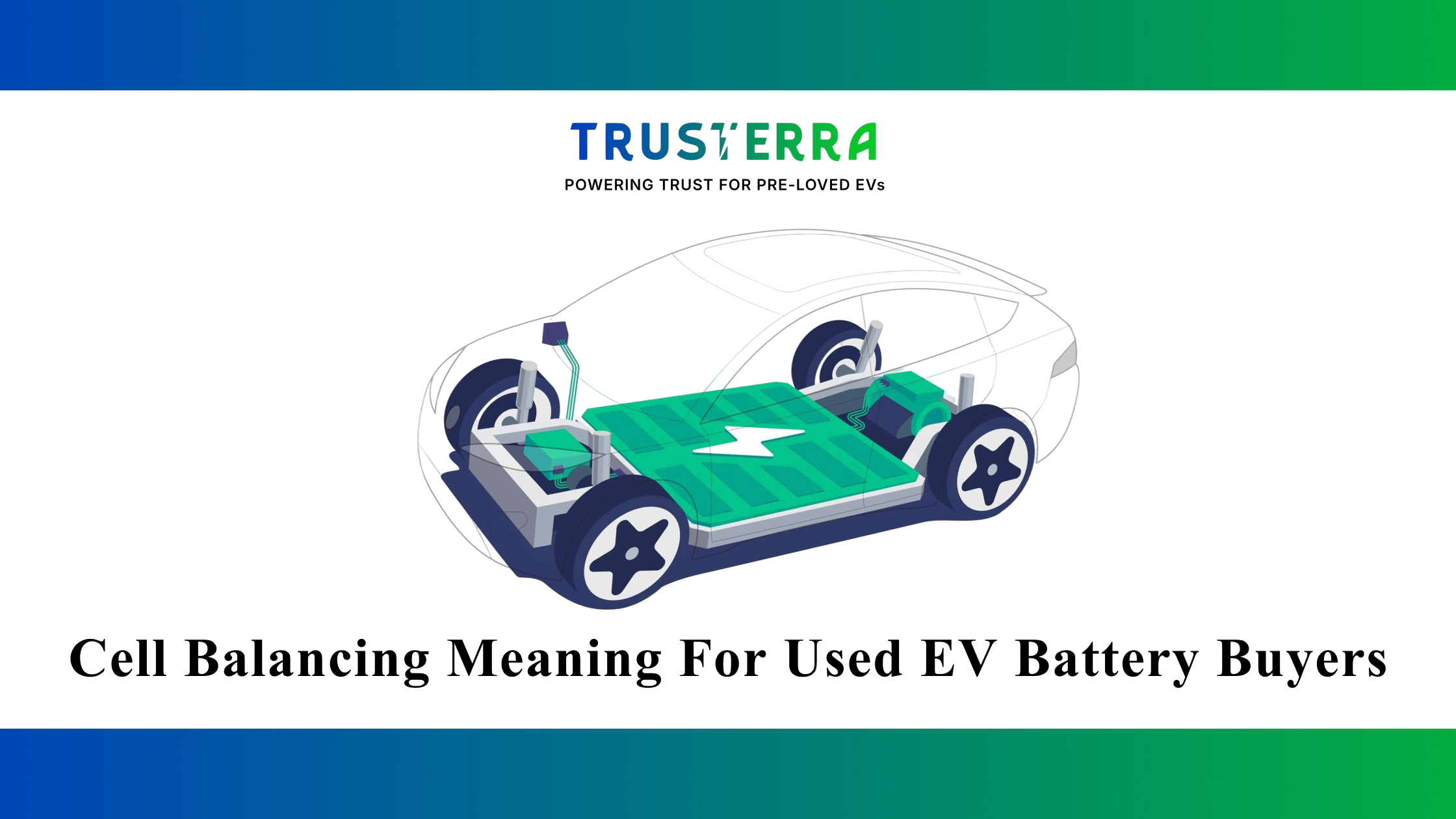
What is Cell Balancing?
Cell balancing keeps cell groups inside an EV battery pack closer in usable charge. An EV battery contains many cells, and not all cells age at the same pace. This matters because a single weak cell group can limit the entire battery pack.
For used EV buyers, cell balancing is more than a technical battery term. It can affect driving range, charging completion, battery warnings, and resale confidence. A used EV with poor balancing may look fine on the outside but still exhibit unstable battery behaviour.
TrusTerra treats battery behaviour as part of used EV trust intelligence. Its TruEV Score™ helps make health, range, future value, and resale readiness easier to understand. This helps buyers avoid judging an EV through age and kilometres alone.
Key Takeaways:
|
What does cell balancing mean in an EV battery?
Cell balancing means reducing charge differences between cells inside a battery pack. The battery management system tracks these differences through voltage, temperature, and current signals. The goal is to keep the pack safer, steadier, and more usable during charging or driving.
- Pack limit: An EV battery pack operates as a single connected system, so a weak cell group can limit the entire pack. This is why a small imbalance can reduce usable capacity even when most cells still hold energy.
- BMS control: The battery management system monitors cell voltage and decides when balancing is needed. It uses this control to prevent some cells from overcharging while keeping others at lower levels.
- Range effect: A poorly balanced pack may stop discharging earlier because one cell group reaches its lower limit first. The driver may see lower practical range without understanding the internal cause.
- Used EV value: Cell balancing matters during resale because it supports confidence in battery behaviour. A buyer should read balancing with SoH, charging response, service history, and warranty status.
Why do EV battery cells become unbalanced over time?
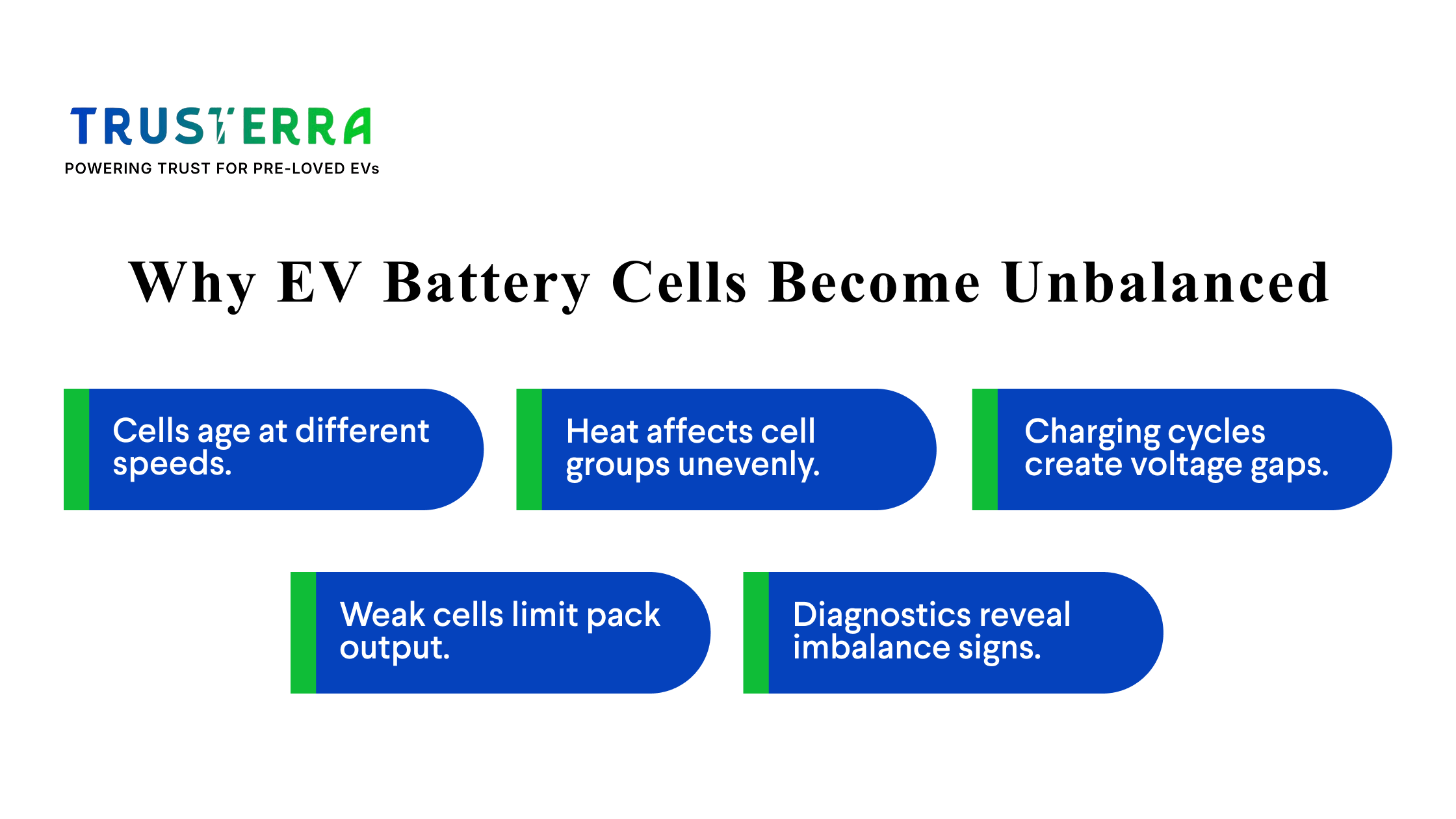
EV battery cells become unbalanced because each cell ages slightly differently. Heat, charging patterns, manufacturing variation, and driving load can widen these small differences over time. As imbalance grows, the weakest cell group can limit the battery’s useful performance.
- Uneven battery ageing can appear when cell groups face different heat levels and usage stress.
- High charging stress can widen small voltage differences across repeated charge and discharge cycles.
- Weak cell groups can force the whole pack to stop charging or discharging earlier.
- Poor thermal control can make imbalance worse when some pack areas run hotter than others.
- Diagnostic reports can reveal imbalance before visible range loss becomes severe for the driver.
How is passive cell balancing different from active cell balancing?
Passive and active cell balancing solve the same problem with different methods. Passive balancing removes extra charge from higher-voltage cells, usually as heat. Active balancing moves energy between cells, which can improve efficiency but needs more complex hardware and control logic.
Difference | Passive cell balancing | Active cell balancing |
Main method | Releases extra charge from higher cells. | Transfers energy between cell groups. |
Energy use | Some energy is lost as heat. | More energy stays inside the pack. |
System design | Simpler circuit design and lower cost. | More complex hardware and software control. |
Common use | Common in many EV battery packs. | Used where efficiency gains justify cost. |
Buyer meaning | Useful feature, not full battery proof. | Advanced method, still needs diagnostics. |
Why does cell balancing matter for EV range and charging?
Cell balancing matters because the battery pack can only perform within the limits of its weakest cell groups. A balanced pack can use more of its available energy. It can also charge more steadily, without early cutoffs or confusing charge readings.
- Range stability: A better-balanced pack can deliver more predictable range during daily use. It does not create new battery capacity, but it can help the pack access existing energy more evenly.
- Charging completion: An imbalance can cause one cell group to reach its upper limit before the others. This may slow charging near the top or stop charging earlier than expected.
- Battery protection: Balancing helps keep cells within safer operating limits during charging and driving. It reduces stress from overcharging or deep discharging in weaker cell groups.
- Resale confidence: Stable battery behaviour helps buyers trust the vehicle during inspection. It also helps sellers explain the range, charging response, and battery condition more clearly.
What warning signs can point to cell balancing issues?
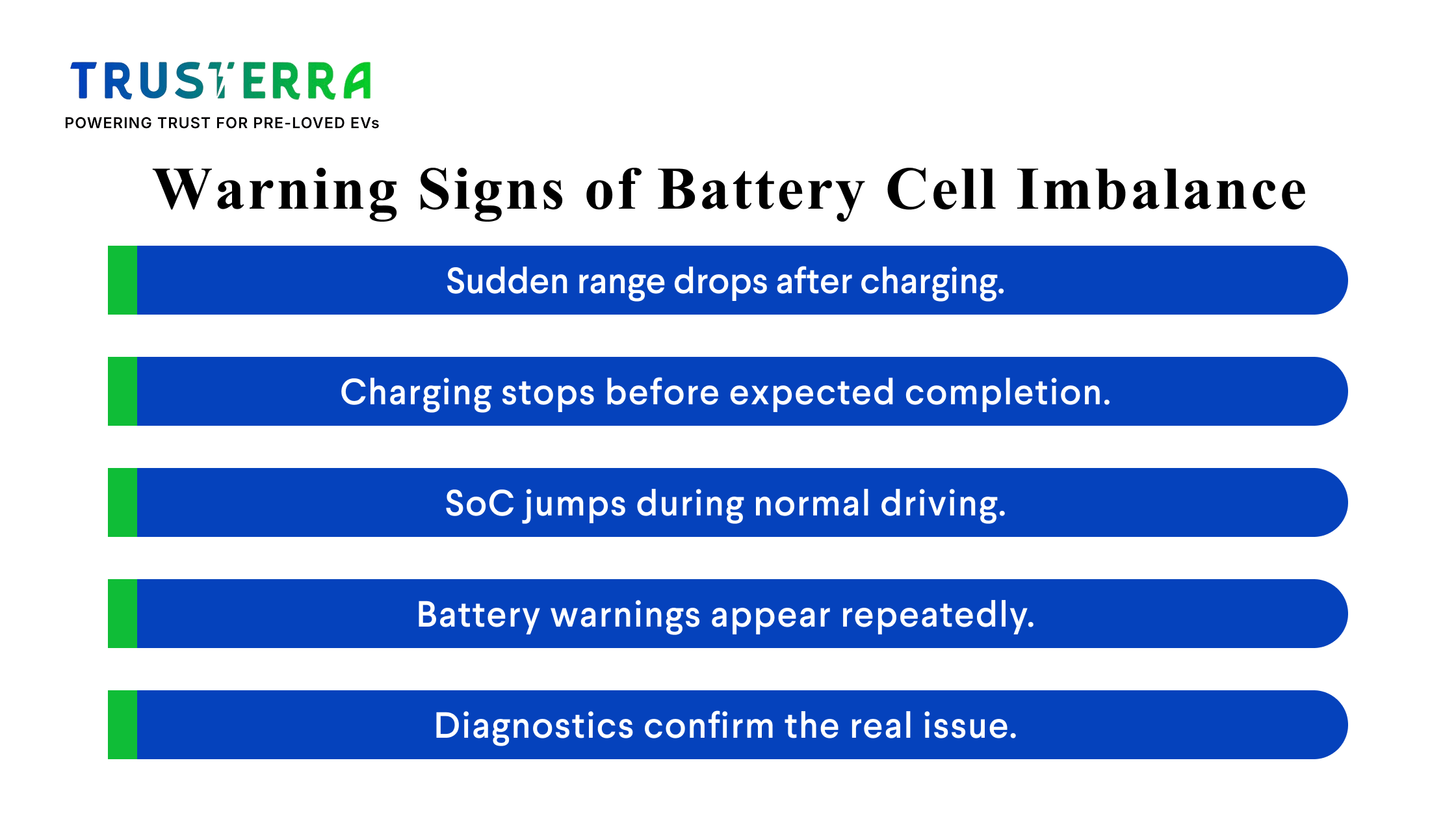
Cell balancing problems can manifest as range drops, early charging cutoffs, sudden SoC jumps, or battery warnings. These signs do not confirm imbalance by themselves. They indicate that the buyer should request more in-depth battery diagnostics before payment.
- Sudden range drops after a full charge can suggest imbalance, calibration trouble, or weak cell groups.
- Charging stops early when one cell group reaches its voltage limit before the others.
- SoC percentage jumps during driving can point to unstable readings or pack-level imbalance.
- Battery warning lights after charging should always lead to a proper diagnostic check.
- Repeated low-charge alerts may show that weaker cells are reaching safety limits first.
Can cell balancing improve battery health in a used EV?
Cell balancing can improve pack behaviour, but it cannot reverse chemical ageing inside battery cells. It helps cell groups work at safer, closer charge levels. A buyer should see balancing as battery management rather than a cure for worn cells.
A used EV may feel more stable after balancing if imbalance was causing range or charging concerns. The improvement can come from better access to existing capacity. It does not mean the pack has recovered lost material or returned to new condition.
This distinction matters during resale. A balanced weak pack remains weak if State of Health is low. Buyers should compare balancing status with SoH, cycle count, warranty coverage, and charging history before accepting the listed price.
How should used EV buyers read cell balancing in reports?
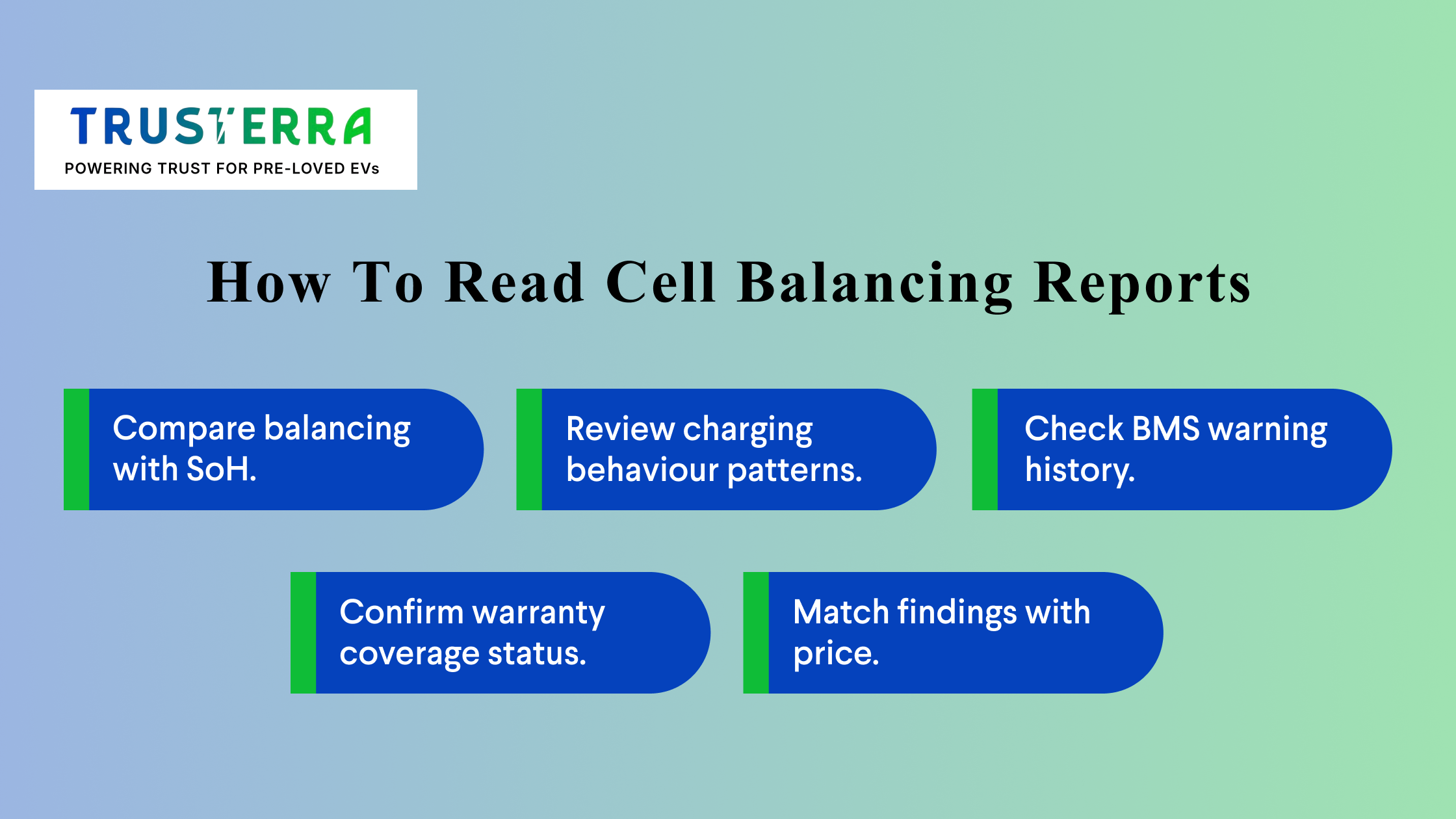
Used EV buyers should read cell balancing as one part of the battery condition story. It explains how evenly cell groups behave during charge and discharge. It should be checked with SoH, BMS alerts, service records, and real-world range behaviour.
- With SoH: State of Health shows remaining battery capacity, while balancing shows how evenly cell groups behave. A used EV can have decent SoH and still show imbalance-related concerns.
- With charging data: Charging interruptions or slow completion make balancing evidence more important. The report should explain whether the issue appears normal, age-related, or service worthy.
- With BMS alerts: Battery management system alerts can help confirm whether imbalance is affecting pack protection. A warning history should never be ignored during used EV inspection.
- With resale pricing: Poor balancing evidence should influence negotiation, especially if range or charging behaviour already feels weak. Better evidence can support stronger seller confidence and fewer buyer doubts.
How does TrusTerra assess cell balancing in used EV decisions?
TrusTerra views cell balancing as part of broader battery intelligence, not as an isolated reading. The platform connects battery behaviour with range confidence, charging response, and resale readiness. This helps buyers and sellers make decisions based on evidence rather than assumptions.
TruEV Score™ helps make the health and value of used EVs easier to understand. It brings together battery-led signals, vehicle condition, ownership records, and resale context. This creates a clearer trust layer for buyers, dealers, lenders, and sellers.
For buyers, this reduces blind spots before payment. For sellers, it supports cleaner pricing conversations with verified data. Get TruEV Score™ from TrusTerra before buying, selling, or financing a used EV.